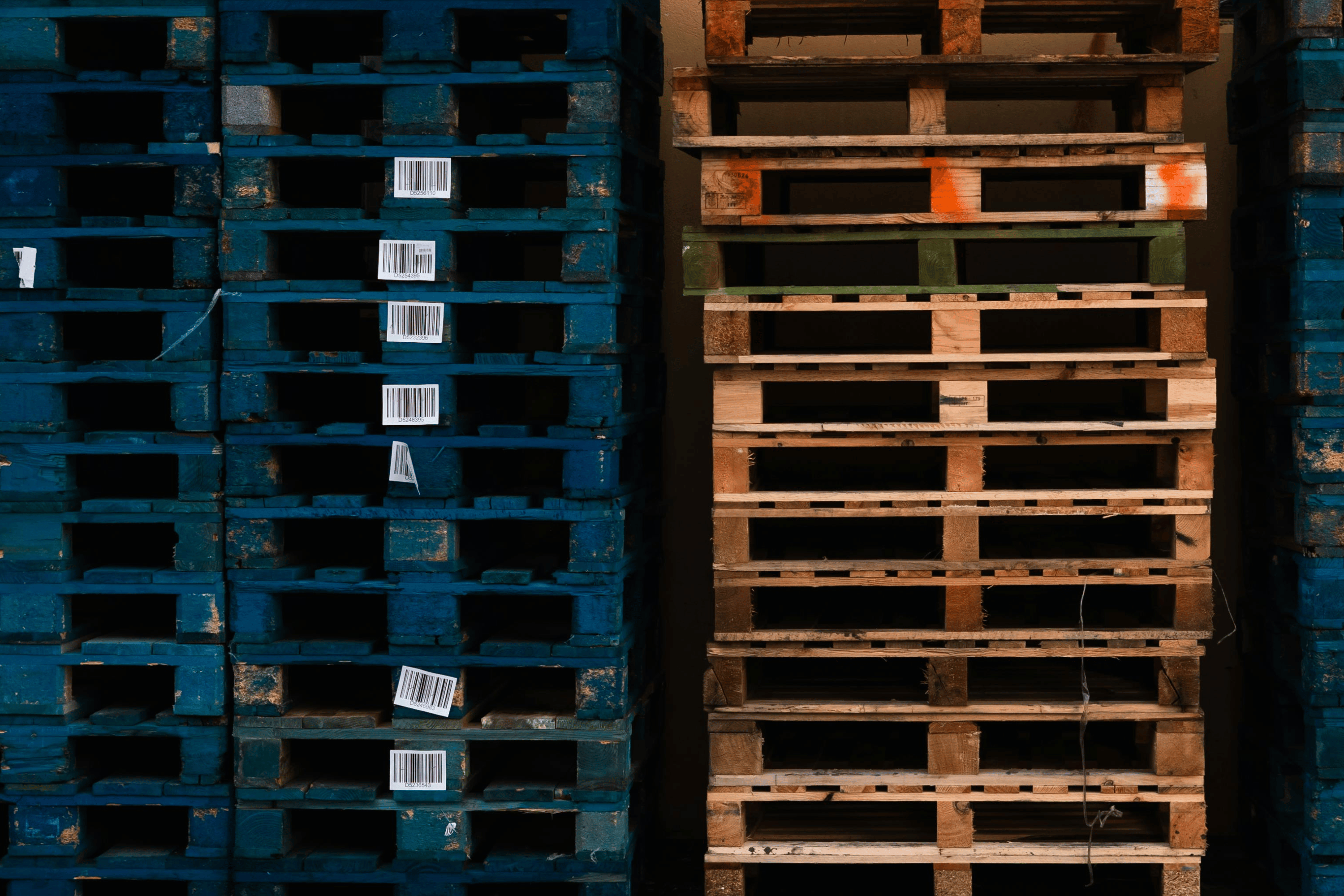
Packing a pallet means protecting the products and keeping the load stable during handling and transport. Match the packaging and securing method to the weight, shape and sensitivity of the goods. This is general guidance; you also need to follow the selected freight service’s instructions.
1. Choose an intact, suitable pallet
Check that the pallet is intact, stable and suitable for the size, weight and handling of the load. Do not use a pallet with damaged load-bearing parts. Check the supplier’s load capacity specifications for the particular model. If you use a one-way pallet, check its format and load capacity for the shipment.
2. Position the goods and distribute the weight
Distribute weight evenly and position heavier items low down to keep the centre of gravity low. Keep goods within the pallet edges. If they do not fit, choose a more suitable format rather than leaving unnecessary overhang.
Stack securely with support for each layer. Boxes of the same size can be stacked in columns with their corners aligned. Adapt the stacking pattern to packaging strength and contents. Do not let heavy pieces crush lighter or more sensitive products.
3. Protect edges, layers and the top
Edge and corner protectors can protect packaging and spread pressure from straps. Layer pads can separate layers and reduce slipping; choose materials suited to the load. A top cover and, where needed, side protection help protect exposed surfaces. Products inside boxes also need suitable protection and support.
4. Secure the goods to the pallet
Use suitable stretch wrap to hold the load together and anchor it to the pallet. Adjust the film tension to hold the goods together without deforming the packaging.
Stretch wrap alone does not always provide sufficient load securing. Heavy, tall or irregular items may need strapping, bracing or other fixing suited to the goods. Protect edges where straps make contact. Prepare the goods so they can be handled and secured without damage; securing them to the pallet does not replace securing the load in the vehicle.
5. Label the shipment as instructed
Position the shipping label where the selected service requires it. It must be firmly attached and readable, with a visible barcode. Avoid covering it with straps, tape or obscuring film. Remove old shipping labels that could be confused with the current one.
6. Measure and weigh after packaging
Enter the total length, width and height at the shipment’s outermost points, including the pallet, goods and packaging. Weigh the packed shipment. Also assess stackability against the service requirements; securely stacking your own boxes does not automatically mean that other freight may be placed on top. See how to measure the full pallet shipment.
Special goods need a separate assessment
Dangerous goods, sensitive products and particular transport conditions may require different packaging, protection and checks. Check the selected service’s requirements before booking and contact Shiplink if you are unsure which service to choose. If you send pallets abroad, also check the destination’s documentation requirements.
Checklist before handing over the pallet
- The pallet is intact and suits the size and weight of the goods.
- Weight is evenly distributed and the load is stable.
- Goods fit within the pallet and sensitive parts are protected.
- The load is secured against sliding, tipping or coming loose.
- The shipping label is positioned as instructed and readable.
- Total dimensions, total weight and stackability have been checked.
- Any special requirements for the goods and service have been checked.
The checklist supports preparation; it does not confirm that the carrier has approved the goods for transport. Shiplink is a freight platform where businesses can compare and book freight services from multiple carriers. Read more about how to book pallet shipping.