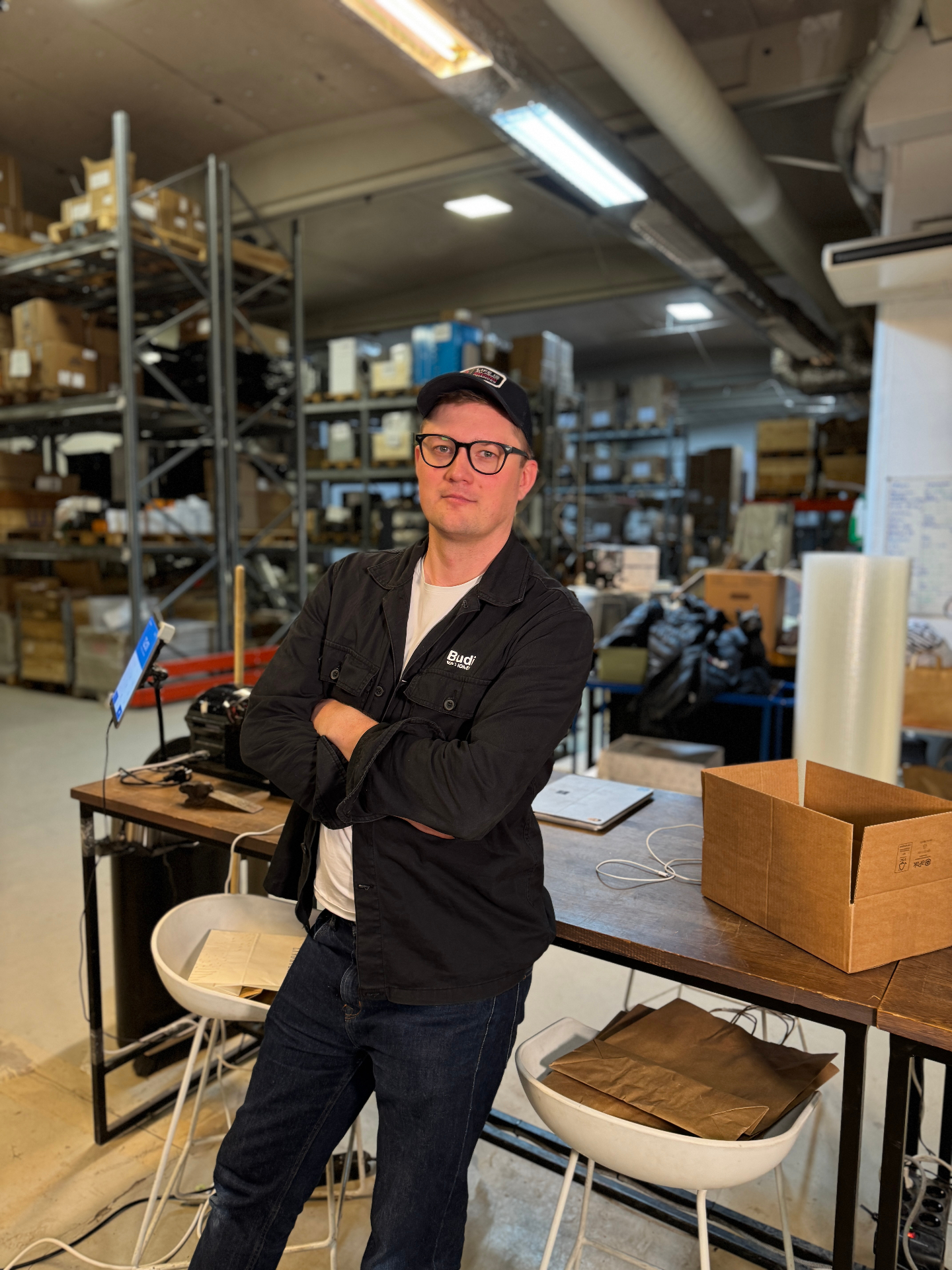
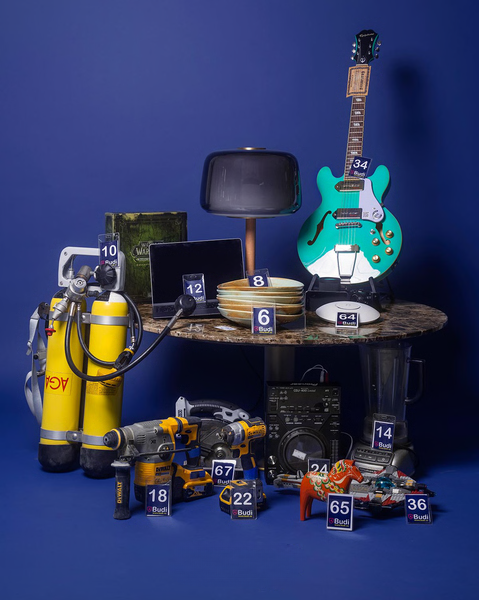
At Budi, products of varying sizes and dimensions are sold, and deliveries arrive at an uneven pace. One moment it's restaurant equipment from a premises that has closed, the next it's tools from a bankruptcy estate, and in between office furniture from a move. Budi is one of Sweden's fastest-growing greentech players, and its business model is about extending the life cycle of everything from industrial machinery to furniture. Variation isn't the exception – it's the very foundation.
That's also why shipping could never be standardised. Second-hand items come in whatever dimensions they happen to have. Every item is weighed, measured and packed individually. What works in a stable online store – fixed package sizes and preset flows – becomes a bottleneck at Budi.
The manual reality
As Budi grew, shipping took more and more time. Bookings were made one at a time, the packing team jumped between several systems, and every shipment required an active decision. The margin for error grew along with the pace.
For Peter Örneholm, CTO at Budi, it was clear that the problem couldn't be solved with more people or better routines. It required a different architecture.
Choosing your battles
Budi's first thought was to sign its own agreements directly with the carriers. That would give full control, but also be a full-time job in itself: negotiating, comparing and constantly keeping track of which carrier was best for which type of shipment.
It wasn't something that belonged in an auction company. That's when they found Shiplink.

Three days to the first booking
Budi chose to build shipping directly into its own internal system, with Shiplink's API as the engine. Three days after the integration work began, they ran the first booking via the API in production.
The internal system is deliberately designed to feel familiar to the packing team, so the learning curve was minimal. What used to take several clicks now happens in the same flow as registering the item: when the packer enters weight and volume, an API call goes to Shiplink, the carrier is selected automatically and the label is printed. All with the press of a button.
When automation becomes invisible
The effect isn't in any single step, but in the fact that shipping has stopped being a separate task. For the packing team, it's no longer something they do – it's something that happens while they do their usual job. Today Shiplink's interface is mainly used for double-checks, shipment lists and special cases. The rest of the time, shipping is invisible.
"Automation isn't a convenience for us. It's a necessity. With Shiplink we've built a flow where shipping just works."
– Peter Örneholm, CTO, Budi
Next step: Shipping as part of the bid
What Budi now wants to build is a shipping integration that starts earlier in the customer journey. A buyer considering a bid on an item far from where they live wants to know what shipping costs before placing the bid, not afterwards. "What will my shipping cost?" is one of the most common questions their customer service receives. But what Budi really wants to do is answer the question before it's asked.
That requires even deeper integration: faster price calculations via the API, standardised box sizes and a data flow that can deliver shipping options in the middle of an ongoing auction. It's logistics that no longer just supports the business. It's part of it.